
Top SEO Platforms for Clinics: 2026 Clinic-Focused Picks
Discover the top SEO platforms for clinics that boost patient acquisition and ensure HIPAA-compliance. Choose the best fit for your practice.

Top SEO Platforms for Clinics: 2026 Clinic-Focused Picks

The best SEO platforms for clinics combine HIPAA-aware workflows, local-search mastery, and measurable patient-acquisition reporting. For most independent clinics and multi-location practices, Klyrmedia is the strongest fit: it’s built specifically for healthcare, handles HIPAA BAA requirements, and ties SEO directly to appointment bookings.
Quick shortlist for clinic owners who need to act now:
- Klyrmedia — clinic-first managed services with HIPAA-compliant web design, local SEO, and booking attribution built in
- Semrush — all-in-one platform with healthcare-targeted features including AI visibility reporting and patient-intent keyword discovery
- BrightLocal — local-pack and Google Business Profile management at scale, especially useful for multi-location groups
- WebFX — full-service agency for mid-size clinics that want SEO, PPC, and analytics managed under one roof
- Google Business Profile — non-negotiable foundation for any clinic that wants to appear in local map searches
Three things that should drive your decision:
- Does the vendor offer a HIPAA Business Associate Agreement (BAA) or explicitly HIPAA-safe workflows?
- Can they demonstrate local/GBP performance tied to actual patient inquiries?
- Do their reports connect search visibility to appointment bookings, not just traffic?
National health systems and government sites dominate broad medical queries, which means your clinic’s real opportunity is hyperlocal and specialty-specific. The platforms below are evaluated with that reality in mind.
Table of Contents
- How do the top SEO platforms for clinics compare?
- How we evaluated these platforms
- Profiles of the top SEO platforms and agencies for clinics
- How do you choose the right SEO platform for your clinic?
- Key Takeaways
- Why clinic specialization changes everything in SEO
- Klyrmedia’s clinic SEO audit offer
- Useful sources and further reading
How do the top SEO platforms for clinics compare?
| Platform / Agency | Best for | Core services | HIPAA / healthcare experience | Pricing shape | Results / case studies |
|---|---|---|---|---|---|
| Klyrmedia | Independent clinics and multi-location practices | HIPAA-compliant web design, local SEO, GBP, PPC, automation, attribution | HIPAA BAA options; clinic-first workflows | Monthly retainer | Clinic-specific patient acquisition attribution |
| Percepture | Clinics seeking managed SEO + reputation help | SEO, reputation management, local search | Healthcare-focused managed services | Retainer | Profile-based local search gains |
| First Page Sage | Content-led authority building | SEO strategy, content, topical authority | Healthcare vertical experience | Retainer | Content-driven organic growth |
| WebFX | Mid-size clinics and groups | SEO, PPC, analytics, full-service marketing | Healthcare client portfolio | Retainer / project | Broad marketing ROI reporting |
| Victorious | Performance-driven SEO campaigns | Tactical SEO, performance reporting | SEO-focused; healthcare clients | Retainer | Clear reporting cadence |
| Ignite Visibility | Clinics in competitive metro markets | SEO, PPC, PR, multi-channel | Enterprise account support | Retainer | Multi-channel visibility wins |
| Semrush | Larger clinics and health systems | Keyword research, technical SEO, AI visibility, local/maps | Healthcare-specific feature sets | SaaS subscription | AI visibility and audit reporting |
| BrightLocal | Multi-location clinic groups | GBP management, citation building, review tracking | Local SEO platform; healthcare use cases | SaaS subscription | Local-pack ranking improvements |
| Yoast SEO | WordPress clinic sites | On-page optimization, schema basics | WordPress plugin; YMYL guidance | Free / premium plugin | On-page content scoring |
| Google Business Profile | All clinics | Local listing, maps, reviews, posts | Google-native; foundational | Free | Local 3-pack visibility |
| Screaming Frog | Technical audits | Site crawl, indexation, on-page issues | Technical SEO tool | One-time / annual license | Technical issue discovery |
| Birdeye | Review acquisition at scale | Review management, reputation analytics | Healthcare reputation workflows | SaaS subscription | Review volume and rating improvements |
| AnswerThePublic | Content and FAQ planning | Question-based keyword discovery | Content research tool | SaaS subscription | Patient-intent content ideas |
| Surfer SEO | Optimizing condition/treatment pages | On-page content optimization, topical scoring | Content optimization tool | SaaS subscription | Content relevance improvements |
| Clearscope | Long-form clinician-reviewed content | Semantic keyword recommendations | Content optimization platform | SaaS subscription | Content comprehensiveness scores |
| Ahrefs | Competitive analysis and link prospecting | Backlink index, keyword research, gap analysis | SEO research platform | SaaS subscription | Competitor gap identification |
| CallRail | Call attribution tied to SEO and GBP | Call tracking, form attribution, recording | HIPAA-compliant call tracking available | SaaS subscription | Call-to-conversion attribution |
| Otterly.AI | Repurposing clinician content | Transcription, content repurposing | Voice/content tool | SaaS subscription | Fast content production from consults |
| Google Search Console | All clinics | Indexation monitoring, search performance | Google-native; free | Free | Direct Google performance data |
| Podium | Front-desk communications + reviews | Messaging, review collection, patient comms | Healthcare messaging workflows | SaaS subscription | Unified review and messaging flows |
| Canva + TinyPNG | Visual content and image optimization | Design, image compression | Design and speed tools | Free / freemium | Page speed and visual asset quality |
| Google Analytics 4 (GA4) | End-to-end booking attribution | Event tracking, user behavior, attribution | Google-native; free | Free | Search-to-booking conversion data |
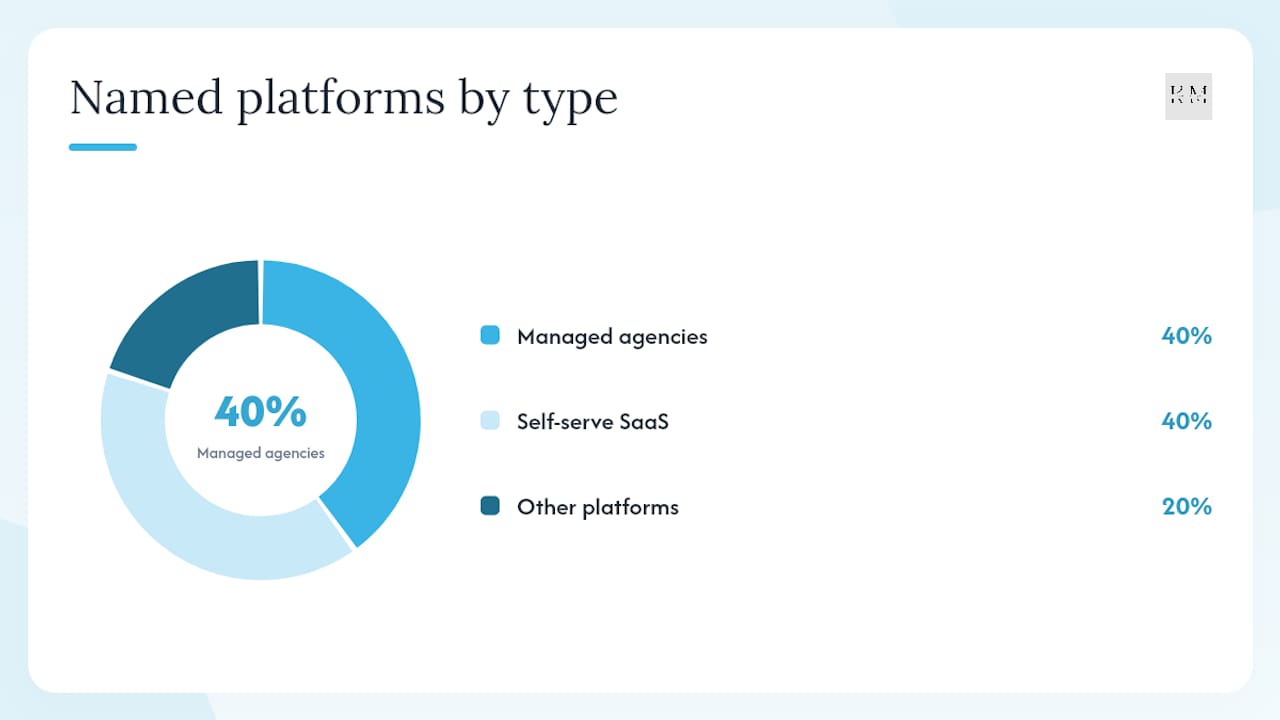
Self-serve vs. managed: Semrush, BrightLocal, Ahrefs, and Surfer SEO are SaaS tools your team operates directly. Klyrmedia, WebFX, Percepture, and Ignite Visibility are managed agencies that own execution. Most clinics without a dedicated in-house SEO team get faster results from a managed partner, especially one that already understands HIPAA constraints.
How we evaluated these platforms
Transparency matters here. Every platform on this list was assessed against seven axes, weighted for clinic-specific needs:
- Technical SEO capability — does it surface crawl errors, schema gaps, and indexation issues a medical practice SEO checklist would flag?
Evidence sources included platform feature pages, published healthcare SEO guides, third-party review platforms (Clutch, G2), and healthcare-specific audit frameworks. HIPAA compliance and local patient-acquisition metrics were weighted most heavily because they represent the two failure modes that cost clinics the most: regulatory exposure and invisible local presence.
Profiles of the top SEO platforms and agencies for clinics
Klyrmedia
Klyrmedia is built for exactly this problem. The agency handles HIPAA-compliant website design, clinic SEO retainers, Google Maps optimization, PPC, and marketing automation, all under one contract. What separates it from generalist agencies is the attribution layer: SEO work is tied directly to appointment bookings, so you can see which search terms and GBP actions are producing patients. HIPAA BAA options are available, and the clinic-first workflows mean your content won’t inadvertently expose PHI through analytics tracking. For independent clinics and multi-location practices that want a single accountable partner, this is the strongest fit on the list.
Percepture
Percepture focuses on managed SEO and reputation management for healthcare providers. Its strength is local-search profile optimization and review management, making it a reasonable option for clinics that need both visibility and reputation help without building an in-house team.
First Page Sage
First Page Sage specializes in content-led authority building for healthcare verticals. If your clinic needs to scale condition and treatment pages, build topical authority in a specialty, or develop a content calendar that earns organic rankings over time, this agency’s approach fits that goal.
WebFX
WebFX is a large full-service agency with a broad marketing stack: SEO, PPC, email, and analytics. Mid-size clinic groups that want centralized reporting across multiple channels tend to get the most value here. The trade-off is that healthcare specialization is one vertical among many for them.
Victorious
Victorious runs performance-driven SEO campaigns with clear reporting cadences. Clinics that want defined deliverables, transparent progress tracking, and results-focused account management will find the structure appealing. Less suited to clinics that need deep HIPAA workflow integration.
Ignite Visibility
Ignite Visibility handles multi-channel campaigns at enterprise scale: SEO, PPC, PR, and social. For clinics in highly competitive metro markets where a single-channel approach won’t cut through, the multi-channel capability and dedicated account support are genuine advantages.
Semrush
Semrush’s healthcare solution covers patient-intent keyword discovery, local and maps visibility, AI visibility reporting, and technical audits. Semrush One positions itself as an all-in-one platform for larger health organizations that need centralized reporting. It’s a SaaS tool, so your team runs it, but the healthcare-specific feature sets are real and well-developed.
Pro Tip: Use Semrush’s AI visibility report to check whether your clinic appears in AI-generated answers for your top five specialty queries. This is the fastest way to identify AEO gaps before a competitor fills them.
BrightLocal
BrightLocal is the go-to platform for local-pack performance at scale. Citation management, GBP auditing, and review tracking are its core strengths. Multi-location clinic groups that need consistent NAP data across dozens of listings and want to monitor local rankings by location will get clear value here. Pair it with a managed agency for full execution.
Yoast SEO
If your clinic runs on WordPress, Yoast SEO handles on-page content scoring, meta optimization, and basic schema markup without requiring a developer. It won’t replace a technical SEO audit, but it keeps your content team from making avoidable on-page mistakes. The free version covers most clinic needs.
Google Business Profile
Every clinic on this list needs a fully optimized Google Business Profile before anything else. It directly controls what appears in Google Maps and the local 3-pack, where most patients start their search. Posts, Q&A, photos, and service categories all affect local-pack ranking. This is free and foundational.
Screaming Frog
Screaming Frog is a technical crawl tool, not an agency. Use it to run a site audit before you engage any vendor, or to verify that a vendor’s technical fixes actually landed. It surfaces broken links, duplicate content, missing schema, and indexation issues that would otherwise stay hidden. The healthcare SEO checklist gaps it catches most often are schema misconfiguration and missing NPI-linked entity signals.
Birdeye
Birdeye centralizes patient reviews across Google, Healthgrades, and other platforms. Its review acquisition flows automate the ask-and-collect process, which matters because review volume directly affects local-pack rankings. Clinics that struggle to get patients to leave reviews consistently will see the fastest lift here.
AnswerThePublic
AnswerThePublic visualizes the questions patients actually type into search engines. Use it to build condition FAQ pages, identify content gaps, and map patient intent before writing a single word. It’s a research tool, not an execution platform, but the patient-intent data it surfaces is genuinely useful for content planning.
Surfer SEO
Surfer SEO compares your condition and treatment pages against top-ranking competitors and tells you exactly what to adjust: word count, heading structure, keyword density, and topical coverage. For clinics trying to rank for specific procedure or condition queries, it removes the guesswork from content optimization.
Clearscope
Clearscope focuses on semantic coverage, making sure your long-form clinical content covers the full range of related terms Google expects to see. It’s most useful when a clinician is reviewing and approving content, because the recommendations are granular enough to require subject-matter judgment.
Ahrefs
Ahrefs has the deepest backlink index available. Use it to identify which sites link to your competitors but not to you, find keyword gaps in your specialty, and track your domain authority over time. It’s a research and monitoring platform, not an execution tool.
CallRail
CallRail tracks which marketing sources drive phone calls to your clinic. For SEO and GBP campaigns, it closes the attribution loop: you can see that a patient found you through a Google Maps search, called your front desk, and booked an appointment. HIPAA-compliant call tracking configurations are available, which matters for healthcare.
Otterly.AI
Otterly.AI converts audio from clinician interviews, telehealth consults, or webinars into written content. For clinics that want to publish clinician-authored condition pages but struggle to get physicians to write, this tool turns a 20-minute conversation into a draft article. It’s a production accelerator, not an SEO platform.
Google Search Console
Free, direct, and non-negotiable. Google Search Console shows you which queries drive impressions and clicks, which pages have indexation issues, and where your Core Web Vitals stand. Every clinic should have it set up and reviewed monthly, regardless of which other tools or agencies they use.
Podium
Podium unifies front-desk messaging, review collection, and patient communications in one platform. It’s particularly useful for clinics where the front desk is the bottleneck for review requests. The integrated messaging workflows reduce the manual effort of following up with patients post-visit.
Canva + TinyPNG
Canva handles visual content creation for GBP posts, local landing pages, and patient-facing materials. TinyPNG compresses images before upload, which directly affects page load speed. Both are free or low-cost tools that prevent the common mistake of uploading unoptimized images that slow down clinic pages.
Google Analytics 4 (GA4)
GA4 is the measurement foundation for any clinic that wants to connect search traffic to appointment bookings. Its event-based model lets you track the full path from a Google search to a booking form submission. Without GA4 configured correctly, you’re flying blind on which SEO work is actually producing patients.
How do you choose the right SEO platform for your clinic?
Selection criteria checklist
Before you talk to a single vendor, know what you need:
- HIPAA BAA availability or documented HIPAA-safe analytics workflows
- Demonstrated local/GBP experience with clinic clients, not just general local businesses
- Clinician-reviewed content workflows with author attribution and schema markup
- AI/AEO monitoring capability, given that mobile-first search and AI answers are the two dominant 2026 shifts for clinic visibility
- Integration with your booking system, PMS, or EHR for attribution
- Reporting that connects search performance to patient inquiries and appointments, not just sessions
For deeper local tactics, the local SEO guide for healthcare practices covers GBP, citations, and review flows in practical detail.
Questions to ask every vendor
- “Can you provide a HIPAA BAA, and how do your analytics workflows avoid PHI exposure?”
- “Show me a case study from a clinic in our specialty with before/after patient acquisition metrics.”
- “How do you handle Google Business Profile optimization and ongoing GBP management?”
- “What structured data do you implement for practitioners, and do you use NPI-linked entity signals?”
- “How do you measure and report on AI visibility (AEO) for our target queries?”
- “What does your onboarding process look like, and what do you need from our team?”
- “What’s your minimum contract length, and what does the exit process look like?”
- “How do you connect SEO performance to appointment bookings in your reporting?”
Red flags to watch for
- No BAA offered and no explanation of how PHI is handled in analytics
- Generic “we work with healthcare clients” claims with no clinic-specific case studies
- Missing structured data for practitioners and service pages
- Reports that show traffic and rankings but never tie back to patient inquiries or bookings
- No GA4 setup or booking event tracking in their onboarding process
Pricing and timeline expectations
Solo clinic budgets for managed SEO typically start around $1,500–$3,000 per month for a focused local SEO and GBP program. Multi-location groups and specialty practices with competitive markets run higher, often $4,000–$8,000 per month for full-service managed SEO. SaaS tools like Semrush, BrightLocal, and Ahrefs run $100–$500 per month depending on plan tier.
On timelines: local SEO improvements often show measurable results within a few weeks, while content-driven authority work in competitive specialties can take several months to reach top-3 rankings. Set those expectations with your leadership team before you sign anything.
Key Takeaways
For most clinics, the right SEO platform is the one that combines HIPAA-safe workflows, local-pack mastery, and reporting tied directly to patient bookings, not just traffic.
| Point | Details |
|---|---|
| HIPAA compliance is non-negotiable | Require a BAA or documented HIPAA-safe analytics workflows before signing any vendor contract. |
| Local-pack improvements for clinics often show measurable results in 6–10 weeks, while content-driven authority work in competitive specialties can take 8–12 months to reach top-3 rankings. | |
| Attribution closes the loop | GA4 and CallRail together connect search performance to actual appointment bookings, not just sessions. |
| Hyperlocal beats broad | Independent clinics win on specialty-specific and hyperlocal queries, not broad medical terms dominated by health systems. |
| Klyrmedia for managed clinic SEO | Klyrmedia offers HIPAA-compliant web design, clinic SEO retainers, and booking attribution as an integrated managed service. |
Why clinic specialization changes everything in SEO
Most SEO agencies will tell you they “work with healthcare clients.” What they usually mean is they’ve done a few medical spa websites and know what a meta description is. That’s not the same as understanding why a condition page needs a licensed clinician byline, why your GA4 setup can’t use certain event parameters, or why a GBP category choice can make or break your local-pack ranking for a specific specialty.
The clinics that get the best results from SEO aren’t the ones with the biggest budgets. They’re the ones working with vendors who already know the difference between YMYL content requirements and standard blog optimization, who have a BAA ready to sign, and who set up attribution before they write a single piece of content. Generic SEO produces generic results. A vendor that treats your clinic like a plumbing company will optimize for traffic, not patients.
The 2026 shift toward AI-generated answers makes this even more pointed. When a patient asks an AI assistant for a dermatologist near them, the practices that appear are the ones with structured data, clinician entity signals, and authoritative local content. That’s not something a generalist agency builds by accident.
Klyrmedia’s clinic SEO audit offer
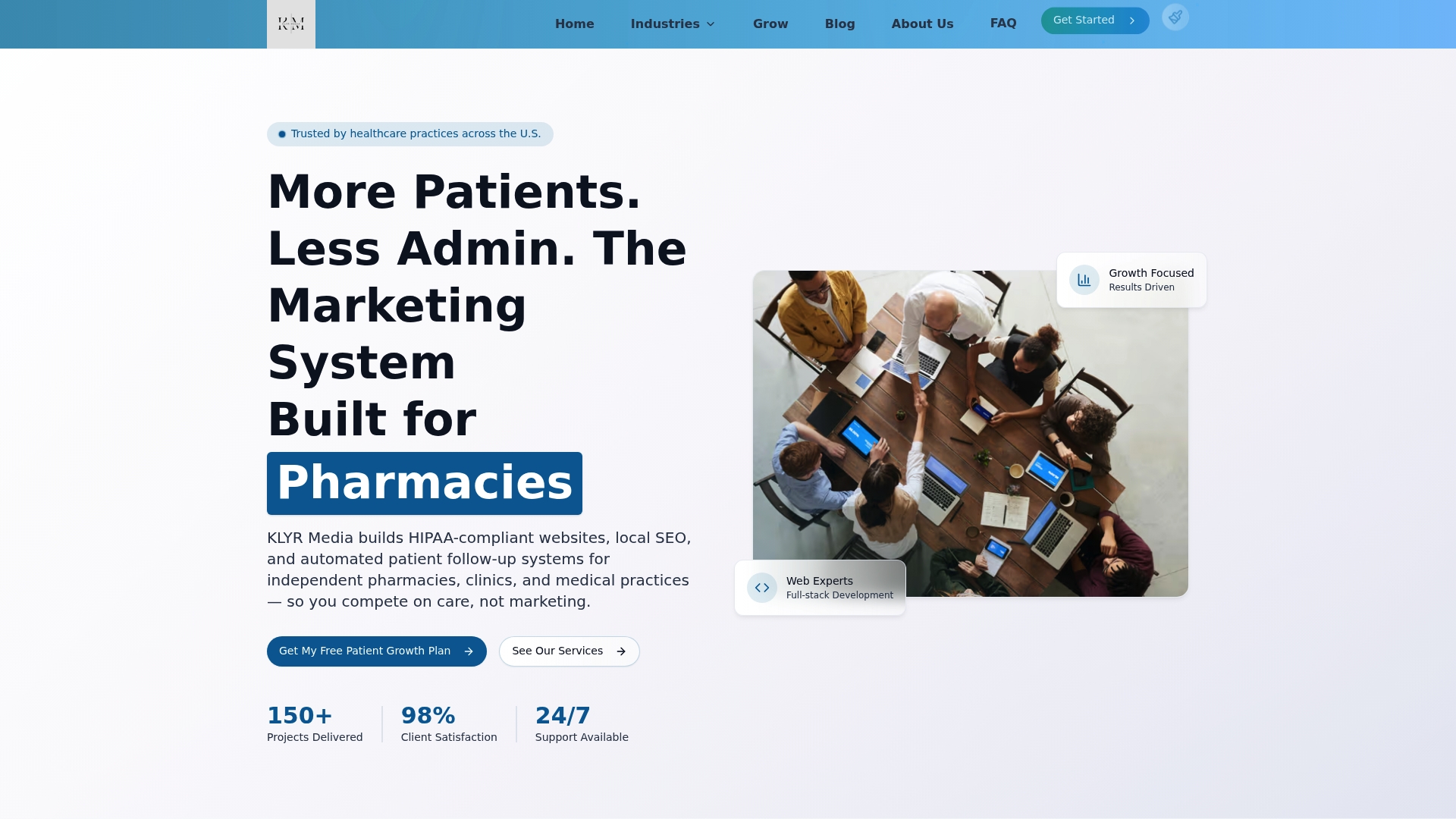
If you’re running a clinic and your SEO vendor can’t show you a direct line from search rankings to booked appointments, that’s a gap worth fixing before your competitors do. Klyrmedia works exclusively with healthcare providers: independent clinics, multi-location practices, and specialty groups across the United States.
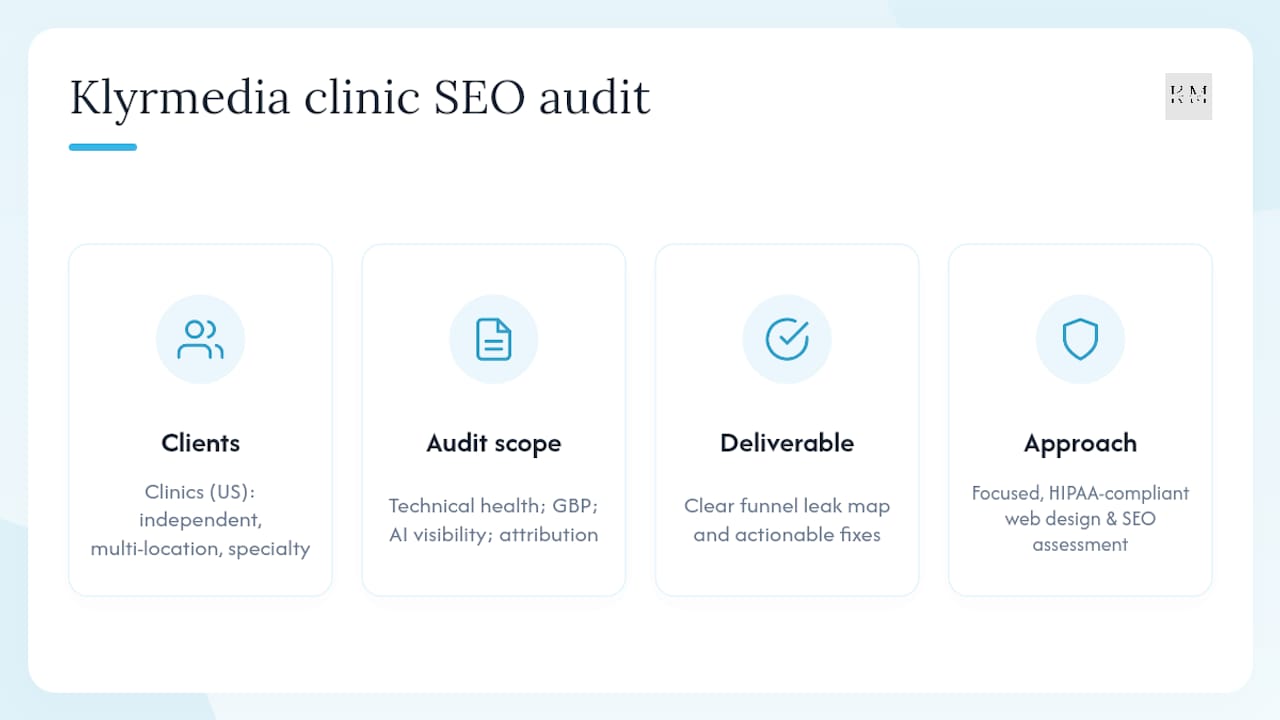
The audit covers site technical health, GBP performance gaps, AI visibility for your top specialty queries, and attribution setup. You leave with a clear picture of where patients are leaking out of your funnel and what it takes to fix it. No generic recommendations, no 90-page reports that sit unread. Just a focused, HIPAA-compliant web design and SEO assessment built for how clinics actually operate. Book a consult with the Klyrmedia team to get started.
Useful sources and further reading
These are the primary references used in this article, organized by what they’re most useful for:
- Healthcare SEO in the US: how to get started
- Medical practice SEO checklist (AuthoritySpecialist)
- SEO for medical (RankPill)
- Semrush for healthcare | Reach more patients in search and AI
- SEORCE - AI-Powered SEO Platform
- Healthcare SEO: Complete 2026 Guide for Medical Practices | ASP Marketing
- SEO For Doctors | 12 Healthcare SEO Techniques & Guide 2026
- Healthcare SEO | A Complete Guide for Medical Practices

