
Pharmacy Vaccine Marketing That Fills Slots for U.S. Indies, IIS Ready
A U.S.-focused playbook for independent pharmacies: use IIS reminders, counter scripts, signage, and simple ops fixes to turn outreach into booked vaccine...

Pharmacy Vaccine Marketing That Fills Slots for U.S. Indies, IIS Ready
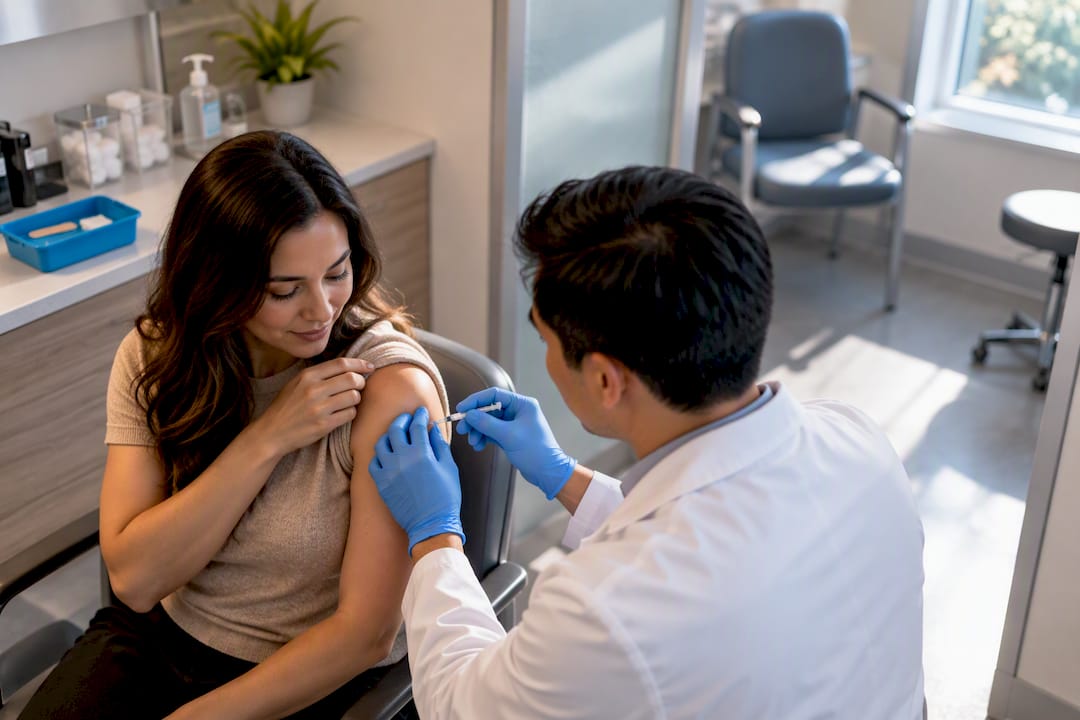
Prioritize a combined program over any single tactic. That means removing access friction, running reminder outreach to eligible patients pulled from your immunization records, and backing both with pharmacist-led conversations at the counter. Start today: pull your state immunization information system (IIS) report for overdue patients and add a booking link to your Google Business Profile.
TL;DR:
- Combining reminders, easier access, and pharmacist-led conversations significantly increases vaccine uptake more than any single tactic.
- Effective signage, scripts, and digital presence with clear calls to action are crucial before investing in paid advertising campaigns.
- Building a reliable reminder system using IIS data and personalized outreach boosts appointment bookings and minimizes missed opportunities.
- Ensuring operational readiness, including staff training, inventory, and flexible scheduling, prevents bottlenecks that damage patient experience.
- Partnering with local organizations like employers and senior centers can generate patient volume without additional ad spend when managed with a streamlined outreach plan.
Table of Contents
- What Is the Most Effective Pharmacy Vaccine Marketing Strategy?
- Fix Your Signage, Scripts, and Website Before Spending a Dime on Ads
- How Do You Build a Reminder System That Actually Books Appointments?
- Is Your Pharmacy Actually Ready for the Foot Traffic Your Marketing Creates?
- Make Your Digital Presence Do the Selling for You
- Which Local Partnerships Bring In Patients Without Ad Spend?
- What Should You Actually Measure Week to Week?
- How KLYR Media Maps to These Vaccine Marketing Gaps
- The Long Game: Why Vaccination Deserves Its Own Line Item
- Turn This Playbook Into a Working System
- Sources
- FAQ
What Is the Most Effective Pharmacy Vaccine Marketing Strategy?
Here’s the thing nobody tells you when you’re staring at a stack of flu shot flyers wondering why the fridge is still full: no single tactic moves the needle much on its own. A systematic review and meta-analysis found that vaccination interventions raise uptake odds by roughly 1.5 times, and the strongest results came from combining reminders, easier access, and direct conversation, not from picking one and hoping. Multi-component programs consistently beat solo tactics because reminders and conversations solve different problems: a text message surfaces a forgotten need, while a pharmacist answers the “is this safe for me” question that a text never will.
Rank your tactics by what you can execute this week versus what needs more setup:
- Pharmacist-initiated conversations at the counter. Zero cost, immediate impact. A study of a regional supermarket pharmacy chain tied personal selling built directly into the dispensing workflow to higher vaccine delivery rates than pharmacies relying on signage alone. Watch conversion from “asked” to “vaccinated.”
- Owned channel fixes: signage, on-hold messages, website, social posts. Low cost, fast to launch. NCPA’s implementation guidance recommends this as the starting point before spending on ads. Track walk-in inquiries tied to specific signage.
- IIS-based reminder and recall outreach. Medium effort, higher payoff once your data is clean. Watch booked-appointment rate from contacted patients.
- Extended access: walk-in hours, weekend clinics, employer partnerships. Higher operational lift, but it’s what actually converts the interest the first two tactics generate. Watch missed-opportunity rate, meaning eligible patients who visited but weren’t vaccinated.
- Local paid ads and geo-targeted digital campaigns. Add this once the first three are humming. Watch cost per booked appointment, not clicks.
If you’re a two-pharmacist independent with no marketing budget, start with the counter conversation and your owned channels. Add IIS outreach and paid tactics once you have the staff bandwidth to actually answer the phone when it rings.
Fix Your Signage, Scripts, and Website Before Spending a Dime on Ads
Most pharmacies leak vaccine revenue not because nobody wants a shot, but because the store never asks clearly enough. NCPA’s guidance stresses that every promotional asset needs a single, obvious next action, whether that’s “call us,” “book online,” or “ask your pharmacist right now.” A poster that says “Flu Shots Available” without a next step is a wasted foot of window space.
Walk your own store like a mystery shopper. Where does a patient actually see vaccine messaging?
- Entry door: one line, one call to action. “Flu, COVID, RSV shots. No appointment needed. Ask at the counter.”
- Pickup counter: a small sign next to where scripts get handed over, since this is where a pharmacist can pivot straight into a conversation.
- Checkout: a QR code linking to your booking page, framed as “Skip the wait, book your shot online.”
- Waiting area: an FAQ card answering the three questions everyone silently has: is it covered by insurance, does it hurt, and how long does it take.
- Exterior: a banner visible from the parking lot, since drive-by visibility drives walk-ins more than most owners assume.
Repetition across these touchpoints outperforms one bold display. A strategic vaccine management analysis from independent pharmacy owners found that grocery-store-style repeated visibility, hitting patients at entry, pickup, and checkout rather than one endcap, improved in-store conversion.
Your on-hold message is prime real estate that most pharmacies waste on dead air or a generic recording. Keep it to one sentence with one action: “While you wait, ask us about flu, COVID, and RSV vaccines. Most insurance plans cover the full cost.” Your receipt or bag stuffer gets the same treatment: one line, one CTA, never three.
Your vaccine service page needs to answer, in order: which vaccines you offer, who’s eligible, what it costs with and without insurance, whether walk-ins are accepted or appointments required, and how long the visit takes. Skip any of those and patients bounce to a competitor’s site that answers faster.
Pro Tip: Check your Google Business Profile attributes monthly during peak season. Pharmacies that let “COVID-19 vaccine” or “flu shots” attributes lapse when they run low on stock, confusing patients who show up expecting a shot that isn’t there that day.
How Do You Build a Reminder System That Actually Books Appointments?
Your dispensing records and your state IIS are the most underused marketing asset in the building. Every pharmacy sitting on a database of patients who got a flu shot last October but haven’t been back for this year’s dose is looking at a warm list, not a cold one.
Here’s the workflow NCPA outlines and that independent pharmacies actually run:
- Identify. Pull records from your IIS or dispensing system to flag patients overdue for flu, COVID-19, RSV, shingles, or pneumococcal vaccines based on age and last-dose date.
- Prioritize. Segment by urgency and value: patients over 65 due for RSV or pneumococcal doses, chronic-condition patients due for flu shots, and families with kids due for routine immunizations all need different messaging.
- Select the channel. SMS and email work for simple reminders. Phone calls work better for patients who’ve been hesitant or who need a real answer to a real concern.
- Confirm the booking. Send a confirmation with the date, time, and what to bring (insurance card, ID).
- Document administration. Log the dose in your system and the state IIS immediately, since that record becomes next year’s reminder trigger.
- Follow up for series completion. Multi-dose vaccines like shingles (Shingrix) or HPV need a second reminder cycle, not a one-time text.
A sample SMS: “Hi [Name], it’s [Pharmacy Name]. You’re due for your flu shot. Reply BOOK to schedule or walk in anytime, no appointment needed.” Keep it under 160 characters and always give a walk-in option alongside the booking link.
For phone conversations, especially with patients who’ve expressed hesitancy before, script a version that leads with a question rather than a pitch: “I noticed it’s been a while since your last flu shot. Is there anything holding you back, or can we get you scheduled?” That opens a real conversation instead of a sales pitch, and it mirrors the personal-selling approach that the regional pharmacy chain study linked to stronger delivery rates. Reminders and dialogue solve different problems: a text surfaces the need, a phone call resolves the doubt.
Escalate to a phone call whenever a patient doesn’t respond to two automated touches, or when the segment is high risk (over 65, immunocompromised, or previously vaccine hesitant).
Privacy matters here more than most owners realize. Keep patient-level outreach lists inside your CRM or pharmacy system, never uploaded to a Facebook or Google ad audience list, even in supposedly anonymized form. HHS guidance on HIPAA treats identifiable health information tied to ad platforms as a serious exposure, and any automation vendor touching patient data needs a signed business associate agreement before you flip it on.
Pro Tip: Run your reminder list through a quick manual scan before the first send of the season. IIS records lag real-world doses by days or weeks, and nothing burns trust faster than reminding someone who got their shot at a different pharmacy last week.
Is Your Pharmacy Actually Ready for the Foot Traffic Your Marketing Creates?
Marketing that works without operations that can absorb the result creates a worse problem than no marketing at all: a line of frustrated patients and a pharmacist who can’t keep up. Before you push a single campaign live, run through a readiness check.
- Staff training. Every technician and pharmacist should be able to answer eligibility and insurance questions without pulling in a manager.
- Inventory and storage. Confirm cold-chain capacity matches expected volume, especially heading into flu and RSV season when demand spikes fast.
- Documentation systems. Your IIS reporting and consent forms should be ready before the first ad runs, not built while patients wait in line.
- Intake forms. Digital pre-registration cuts in-store wait time and reduces the paperwork bottleneck that kills walk-in conversion.
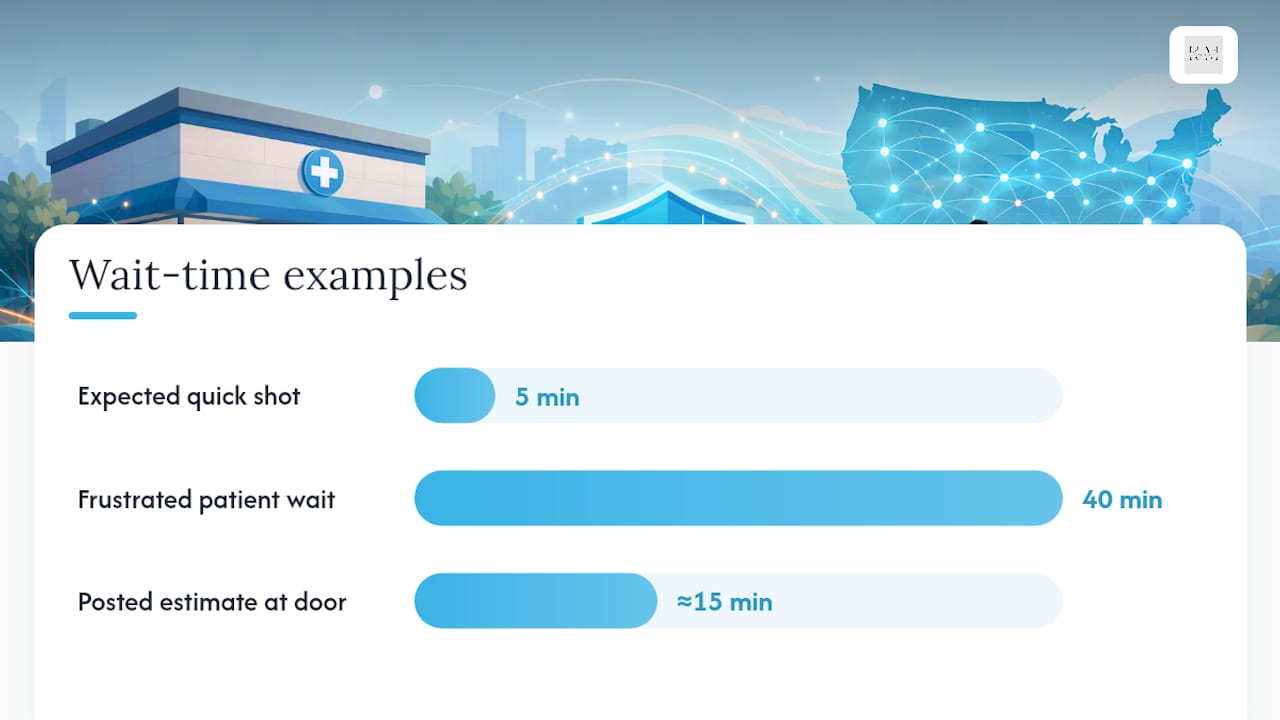
Give walk-in patients and appointment patients separate, clearly signed pathways. A patient who walked in expecting a five-minute shot and instead waits 40 minutes behind six scheduled appointments won’t come back, and won’t recommend you either. Post realistic wait-time expectations at the door: “Walk-ins welcome. Current wait: approximately 15 minutes.”
Scheduling works best with a mix of standing appointment slots and reserved same-day blocks for walk-ins, especially during the first six weeks of flu season when demand front-loads hard. Clinic days, meaning a dedicated block of hours where the pharmacist does nothing but vaccinate, help you process volume without disrupting regular dispensing.
For pharmacies with limited daytime staff, extended access wins more patients than any ad campaign. Consider dedicated evening vaccine hours twice a week, a Saturday morning clinic, or an on-site employer clinic for a local business. These moves convert the “I meant to get it but couldn’t make it during work hours” crowd that every pharmacy loses without realizing it.
Make Your Digital Presence Do the Selling for You
Your website and Google listing either answer a patient’s question in ten seconds or lose them to whoever does. Your vaccine landing page needs a single clear call to action above the fold, the eligibility requirements stated plainly, a cost range with and without insurance, and how long the appointment takes. Bury any of those below a scroll and patients leave for a pharmacy location page that answers faster.
Local search visibility starts with your Google Business Profile:
- Keep vaccine-related attributes (flu shots, COVID-19 vaccine, walk-ins welcome) current every month, especially when inventory runs low.
- Post weekly updates during peak season announcing vaccine availability, hours, and any new services like RSV or shingles doses.
- Prompt satisfied patients for reviews right after a positive vaccine visit, since fresh reviews mentioning “vaccine” or “flu shot” help your listing surface for those exact searches.
- Confirm your hours are accurate everywhere, including holiday and weekend hours during flu season when hours often shift.
Paid local advertising works well for pharmacies when it targets geography and intent rather than demographics pulled from patient data. Geo-targeted search ads triggered by terms like “flu shot near me” or “walk-in vaccine [your city]” convert better than broad awareness campaigns, and they carry none of the privacy risk of uploading a patient list. Never build an ad audience from your dispensing or IIS records; treat that data as CRM-only, per the same HIPAA boundary that governs your reminder outreach.
Short-form content scales further than most owners expect. A 90-second pharmacist video answering “does the flu shot give you the flu” or “can I get my flu shot and COVID booster at the same time” earns more trust than a paragraph of stock copy, because it answers the exact hesitation a patient already has in their head. That mirrors the insight from the supermarket pharmacy chain study: specific answers to specific concerns outperform generic persuasion every time.
Which Local Partnerships Bring In Patients Without Ad Spend?
Employers, senior centers, and schools are sitting on exactly the patient volume you’re trying to reach through digital channels, and they’re often easier to convert because someone there already trusts you.
Prioritize partners by vaccine focus. A senior center points you toward RSV, pneumococcal, and shingles patients. An employer with a workforce under 50 points you toward flu and travel vaccines. A school or daycare points you toward routine childhood immunizations and flu shots for staff.
Build a simple outreach kit before you make the first call: a one-page flyer describing what you offer and how billing works, a dedicated scheduling link or QR code, and a short script for the conversation itself. Employer and community clinics work best when you handle logistics end to end, meaning you bring the vaccines, staff, and documentation to their site rather than asking them to send people to you.
Capture follow-up appointments at the clinic itself. Anyone who needs a second dose, a booster, or a different vaccine than what was offered that day should leave with a scheduled follow-up, not a vague “come see us sometime.”
Measure partner ROI the simple way: track how many booked appointments trace back to each referral source using a unique link or promo code per partner. A one-page monthly report showing “Senior Center X: 14 booked appointments” gives you the leverage to ask for a recurring clinic slot next season, and it’s a medical service partnership model that works whether your referral source is a senior center or a nearby clinical practice.
What Should You Actually Measure Week to Week?
Track four numbers, not forty. Booked appointment rate tells you whether your outreach and ads are converting interest into scheduled visits. Walk-in conversion tells you whether foot traffic in the store is turning into shots given. Recommendation-to-administration rate tells you whether pharmacist conversations are closing. Series completion rate matters most for multi-dose vaccines, where a missed second appointment means a wasted first one.
A component-level analysis of intervention effectiveness found that combined interventions, meaning dialogue plus reminders plus access improvements together, produced the largest average effect on uptake compared with any single approach run alone. That’s the case for testing combinations, not isolated tactics.
Run small, specific tests rather than overhauling everything at once:
- A/B test your pharmacist’s opening line at the counter over two weeks.
- Test SMS wording: “You’re due for a flu shot” versus “Skip the wait, book online now.”
- Test appointment slot timing: morning blocks versus after-work evening blocks.
- Test channel sequencing: SMS first with phone follow-up versus phone first with SMS confirmation.
Align campaign intensity with what your inventory and staffing can actually handle. Pushing a big reminder blast the same week you’re low on flu vaccine doses creates disappointed patients and wasted ad spend. Review your numbers weekly during peak season, monthly otherwise, and adjust one variable at a time so you know what actually moved the result.
How KLYR Media Maps to These Vaccine Marketing Gaps
Every gap above traces back to a fixable operational or digital problem. Weak local visibility usually means your Google Business Profile and on-page SEO need attention, which is exactly what healthcare SEO work addresses. A vaccine service page that doesn’t answer eligibility, cost, and booking questions fast enough needs a rebuild grounded in HIPAA-compliant web design. A reminder system running on manual phone calls and sticky notes needs the kind of structured patient retention automation that keeps IIS-triggered outreach consistent without burning staff hours.
A typical starter engagement runs three steps: an audit of your current site, listings, and outreach workflow; a prioritized list of fixes ranked by expected impact; and a phased launch that doesn’t overwhelm your staff with five new systems at once.
The Long Game: Why Vaccination Deserves Its Own Line Item
Vaccines aren’t a seasonal side hustle. They’re a recurring reason for a patient to walk through your door every year, and every one of those visits is a chance to build the kind of relationship that keeps someone filling prescriptions with you instead of a chain three miles away.
I’ve seen the pattern play out the same way across independent pharmacies that treat vaccination as a real service line: the pharmacy that runs a clean reminder cycle and trains staff to have the counter conversation ends up with patients who return every fall without needing to be convinced twice. The one relying on a single poster in October watches that same patient drift to whichever store happens to have a sign up that week.
Marketing gets you the first visit. Operational readiness, meaning enough vaccine on the shelf and a staff member ready to answer a real question, decides whether that patient becomes a repeat one. Build both together, or don’t bother building either.
— Opinly
Turn This Playbook Into a Working System
We provide specialized services tailored to healthcare and pharmacy operations, focusing on compliance and patient conversion rather than generic traffic metrics that don’t translate into booked appointments.
If your Google Business Profile is outdated, your vaccine landing page buries the booking link, or your reminder outreach is running on memory instead of a system, that’s the exact gap our Healthcare SEO Service and Retention Automation Service close. We start with an audit of your current site, listings, and outreach workflow, then hand you a prioritized fix list before touching a single line of code. From there, a HIPAA-compliant web design rebuild or an automated reminder cadence launches in phases so your staff isn’t relearning five systems at once.
Request a quick audit through our services page and see exactly where your vaccine promotion is leaking appointments before flu season peaks.
Sources
For the numbers behind this playbook, start with the CDC’s RespVaxView national vaccination-setting estimates, the peer-reviewed supermarket pharmacy chain study on personal selling, NCPA’s vaccine services implementation guide, and the systematic review and meta-analysis on intervention effectiveness. Confirm your own pharmacist scope of practice and reporting rules with your state IIS, since these vary state to state.
- Marketing Two Immunization Services at a Regional Supermarket Chain Pharmacy - PMC
- A Guide to Implementing Vaccine Services in Community Pharmacy | NCPA (2023)
- Systematic review and meta-analysis on vaccination interventions (PMC)
- Federal Retail Pharmacy Program contributions to bivalent COVID-19 vaccinations — MMWR 2024
FAQ
Do Pharma Companies Make Money on Vaccines?
Yes, vaccine manufacturers generate substantial revenue from vaccine sales, which is a separate business layer from what an independent pharmacy earns through dispensing fees and administration reimbursement. Your pharmacy’s margin comes primarily from the administration fee and any associated clinical service billing, not from the vaccine’s wholesale markup.
What Is the 3/2/1 Rule for Vaccines?
This isn’t a standardized clinical or regulatory framework recognized across pharmacy practice, so definitions circulating online vary and aren’t consistent enough to state as fact. If you’ve seen it referenced for a specific vaccine schedule or storage protocol, verify it against your state IIS guidance or the manufacturer’s own documentation rather than a general rule of thumb.
How Big Is the Vaccine Market?
The U.S. vaccine market is large enough that pharmacies now serve as the dominant delivery point for adults: CDC data shows pharmacies or drug stores accounted for 48.0% of flu vaccinations, 71.5% of updated COVID-19 vaccinations, and 81.7% of RSV vaccinations among U.S. adults in the 2023 to 2024 respiratory virus season. Federal Retail Pharmacy Program partners alone administered 67.7% of U.S. bivalent COVID-19 doses during a defined reporting period, showing the scale pharmacies operate at nationally, even though individual store results still depend on local execution.
Do All U.S. States Allow Pharmacists to Administer Vaccines?
Pharmacist authority to administer vaccines exists in every U.S. state, but the specific vaccines covered, patient age ranges, and prescribing requirements vary significantly by state law. Always confirm your current scope of practice with your state board of pharmacy and your state IIS before adding a new vaccine service to your offerings.
What’s the Fastest Way to Start Pharmacy Vaccine Marketing With No Budget?
Start with pharmacist-initiated conversations during prescription pickup and fix your owned channels, meaning signage, your website’s vaccine page, and your Google Business Profile. Both cost nothing beyond staff time and, per NCPA’s guidance, form the foundation every paid or automated tactic should build on.

