

Local SEO Step by Step for Healthcare Providers: 2026 Guide

Local SEO, formally called local search optimization, is the process of making your healthcare business visible when nearby patients search for services you offer. Google Business Profile signals account for approximately 36% of local pack ranking factors. That single number explains why independent clinics and pharmacies that ignore their profile lose patients to competitors who simply show up. This local SEO step by step guide walks you through every stage, from initial setup to ongoing maintenance, so your practice attracts more local patients consistently.
What prerequisites and tools do you need before starting local SEO?
Before touching a single setting, you need the right foundation. Skipping this step is like renovating a building without checking the structure first.
Claim and verify your Google Business Profile. An unverified profile has zero visibility in the local map pack, regardless of how good your website is. Go to Google Business Profile, search for your practice, and complete the verification process by mail, phone, or video.

Gather your NAP data. NAP stands for Name, Address, and Phone number. Write down the exact legal business name, full street address, and primary phone number you will use everywhere. One character difference between listings can hurt your rankings.
Here is what you need before you start:
- Google Business Profile access (verified and claimed)
- Accurate NAP details (name, address, phone, website URL)
- Service list with descriptions for each treatment or pharmacy service
- Keyword research tool such as Google Search Console or Google Keyword Planner
- Citation tracking tool to monitor directory listings
- Review monitoring setup via email alerts or a dedicated platform
| Tool category | Purpose | Free option available |
|---|---|---|
| Keyword research | Find local search terms patients use | Google Keyword Planner |
| Citation tracking | Monitor NAP consistency across directories | Whitespark (limited free tier) |
| Review management | Track and respond to patient reviews | Google Business Profile dashboard |
| Analytics | Measure traffic and ranking changes | Google Search Console |
Pro Tip: Before making any changes, screenshot your current Google Business Profile stats, call volume, and website traffic. You need a baseline to measure whether your efforts are working.
How to optimize your Google Business Profile for healthcare local SEO
Your Google Business Profile is the single most important asset in your local SEO checklist. Get this right and everything else builds on a solid base.
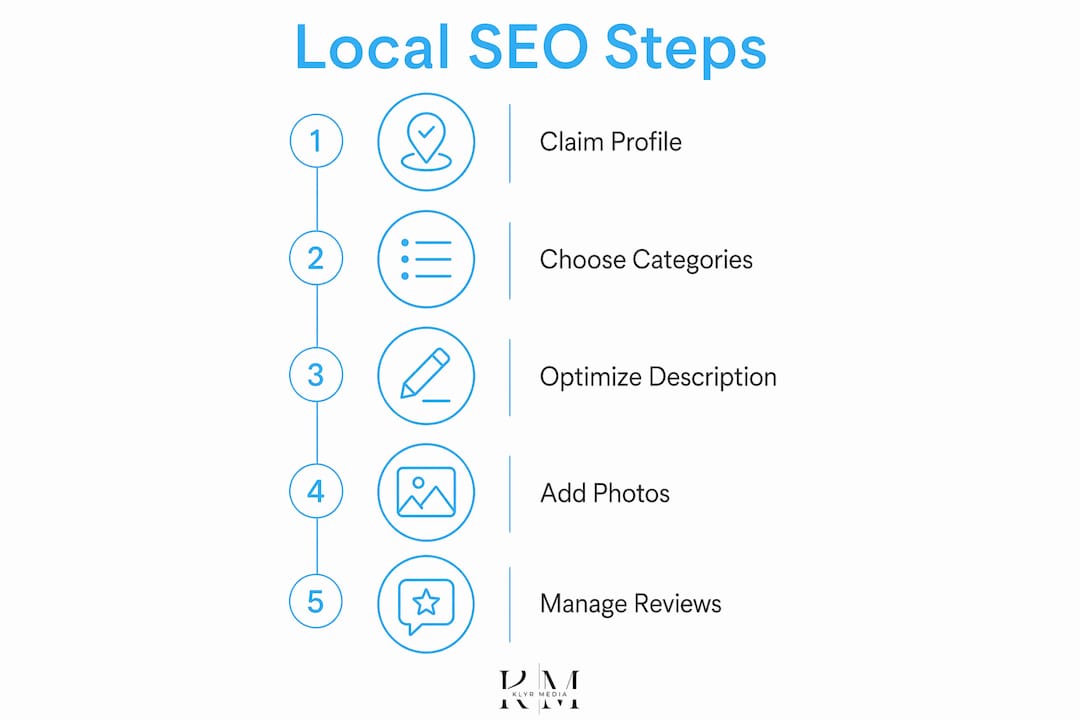
Use your real business name
Do not add keywords to your business name field. “City Family Pharmacy” is fine. “City Family Pharmacy Best Prices Prescriptions” will get your profile suspended. Google penalizes keyword stuffing in business names, and the risk is not worth it.
Choose the most specific categories
Google’s local algorithms favor specificity, so a narrowly defined primary category sends a stronger relevance signal than a broad one. If you run an independent pharmacy, select “Pharmacy” as your primary category, not “Health.” Add secondary categories like “Compounding Pharmacy” or “Medical Clinic” only if they genuinely apply.
Write a description that works as a technical tool
The first 250 characters of your GBP description are the most critical. Google truncates the rest in most views. Lead with your primary service and city name, then expand to the full 750-character limit. Think of the description as a technical SEO tool, not just marketing copy.
Upload photos consistently
Profiles with 100+ photos receive 520% more calls and 2,717% more direction requests than average profiles. That gap is enormous. Upload 3–5 new photos every month: your storefront, interior, staff (with consent), and any patient-facing areas. Consistent uploads signal active management to Google.
Complete every section
Work through this checklist for your profile:
- Verify business name matches your legal name exactly
- Confirm address and phone number match your website
- Set accurate hours, including special holiday hours
- Add all services with keyword-rich descriptions
- Populate the Products section if applicable
- Enable Google Messaging and commit to responding within one hour
- Seed the Q&A section with five to ten common patient questions and your answers
Pro Tip: Updating special holiday hours signals active maintenance to Google and prevents patient frustration during peak seasons. Set them at least two weeks in advance.
What local SEO website optimizations should healthcare providers implement?
Your website and your Google Business Profile work together. One without the other leaves ranking potential on the table.
Create location-specific landing pages. Each location you serve needs its own page with at least 500 words of unique content. Include local patient testimonials, the specific address, a phone number, and details about services available at that location. Thin, duplicate pages do not rank.
Implement schema markup. LocalBusiness schema tells search engines exactly what your business is, where it is, and what it does. FAQPage schema helps your content appear in AI-powered search results. 40.16% of local business queries now trigger AI Overviews, which pull from structured data like schema and GBP service descriptions. If your site lacks schema, you are invisible to a growing share of searches.
Prioritize mobile performance. Your site must load in under three seconds on a mobile device. Add tap-to-call buttons above the fold and display your address prominently on every page. Most patients searching for a nearby clinic or pharmacy are on their phones.
| Website element | Minimum standard | Why it matters |
|---|---|---|
| Location page content | 500+ words, unique per location | Thin pages do not rank |
| Page load speed | Under 3 seconds on mobile | Slow sites lose patients before they call |
| Schema markup | LocalBusiness + FAQPage | Required for AI Overview visibility |
| NAP consistency | Matches GBP exactly | Inconsistency confuses search engines |
| Embedded Google Map | On contact/location page | Reinforces geographic relevance |
Use local keywords naturally in your title tags, H1 headings, and body content. “Compounding pharmacy in [City]” in a page title is far more effective than a generic “Services” page. Internal links between your location pages and service pages, using descriptive anchor text, also distribute ranking authority across your site.
Pro Tip: Add your healthcare SEO fundamentals to a dedicated resource page. Internal links to that page from your location pages strengthen topical authority across your whole site.
How to build and maintain citations and manage patient reviews effectively
Citations are mentions of your business name, address, and phone number on other websites. They confirm to Google that your business is real and located where you say it is.
Building citations the right way
Start with the major directories: Google Business Profile, Yelp, Healthgrades, WebMD, and your local Chamber of Commerce. Then move to healthcare-specific directories relevant to your specialty. The goal is not volume. It is accuracy. Every listing must use the exact same NAP you established in your prerequisites.
Here is a repeatable process for citation building:
- Audit existing citations using a tool like Whitespark or BrightLocal to find inconsistencies
- Correct any NAP errors before building new listings
- Add your practice to five to ten new directories per month
- Document every listing in a spreadsheet with the URL and login credentials
- Review all listings quarterly for accuracy
Managing patient reviews
Review frequency and recency matter more than total star count for local rankings. A practice with 12 reviews in the last 90 days outranks one with 200 reviews from three years ago. Target 4–7 new reviews per month by asking patients directly after a positive interaction. A simple text message with a direct Google review link works well.
Respond to every review, positive or negative, within 24 hours. A personal, specific response shows Google and future patients that you are engaged. Never buy or automate fake reviews. Fake review services lead to profile suspension, and recovery is painful and slow.
Pro Tip: Add your Google review link to your email signature, appointment reminder texts, and a small sign at your front desk. Patients who intend to leave a review often forget. A gentle, visible reminder converts that intention into action.
What ongoing local SEO activities are necessary for sustained healthcare search visibility?
Local SEO is not a one-time project. Measurable ranking improvements often appear within 30 days of fixing high-priority issues, but sustaining those gains requires consistent weekly effort. Plan for 2–3 hours per week of maintenance.
Build these tasks into your regular schedule:
- Weekly: Respond to new reviews, check Google Business Profile for suggested edits, post one update or photo
- Monthly: Add 3–5 new photos to GBP, request 4–7 new patient reviews, update any service or hours changes
- Quarterly: Audit NAP consistency across all directories, compare your rankings against local competitors, refresh location page content with new testimonials
- Annually: Review your primary and secondary GBP categories, update schema markup, and reassess your keyword strategy
Successful local SEO follows a cyclical routine of auditing, updating photos, generating reviews, and creating local content. Healthcare providers who treat it as a set-and-forget task consistently lose ground to practices that stay active.
Track these metrics monthly to know if your efforts are working: call volume from GBP, direction requests, website clicks from local search, and your position in the local map pack for your top three service keywords. If numbers plateau, that is your signal to audit and adjust.
Pro Tip: Set a recurring calendar reminder every quarter for your local search ranking review. Treat it like a financial audit. The practices that review consistently are the ones that catch ranking drops before they become patient losses.
Key takeaways
Consistent, structured local SEO built around an optimized Google Business Profile, accurate citations, and authentic patient reviews is the most reliable way for healthcare providers to attract local patients through search.
| Point | Details |
|---|---|
| GBP is your top priority | Google Business Profile drives approximately 36% of local pack rankings, so claim and complete it first. |
| Photos drive real engagement | Profiles with 100+ photos receive dramatically more calls and direction requests than average profiles. |
| Schema markup is now required | 40.16% of local queries trigger AI Overviews, making structured data critical for visibility. |
| Reviews need frequency, not just volume | Target 4–7 new patient reviews per month and respond to every one within 24 hours. |
| Maintenance beats one-time setup | Plan 2–3 hours weekly and conduct quarterly audits to sustain and grow your rankings. |
What I’ve learned from working local SEO in healthcare
Most healthcare providers I talk to are afraid to touch their Google Business Profile. They set it up once, years ago, and leave it alone because they worry that changing something will break what little visibility they have. That fear is the single biggest mistake I see.
Continuous updates with accurate information actively boost rankings. Google interprets regular updates as a signal that the business is active and trustworthy. A profile that sits untouched for six months looks abandoned to the algorithm.
The other thing I want to be direct about: AI-powered search is changing the rules faster than most practice owners realize. Healthcare providers must treat local SEO as an evolving discipline under the growing influence of AI. The practices that win in 2026 are the ones feeding Google clean, structured, specific data through their GBP, their schema markup, and their website content.
Shortcuts do not work here. Fake reviews get you suspended. Keyword-stuffed business names get you penalized. The only path that holds up is authentic patient engagement, consistent data, and regular maintenance. That is not glamorous advice. But it is what actually works.
— Opinly
How Klyrmedia helps healthcare providers win local search
Healthcare local SEO has compliance layers that generic marketing agencies simply do not understand. Your website needs to be HIPAA-compliant by design, not patched for compliance after the fact. Klyrmedia builds websites for clinics, independent pharmacies, and medical practices that are secure, fast, and structured for local search from day one.
Beyond website design, Klyrmedia’s clinic practice solutions connect your digital presence to your patient management workflow, so the patients your local SEO attracts actually convert into appointments. If you want a team that understands both the technical side of local search and the specific demands of healthcare compliance, Klyrmedia is built for exactly that.
FAQ
What is local SEO step by step for healthcare?
Local SEO step by step is the process of systematically optimizing your Google Business Profile, website, citations, and patient reviews to rank in local search results. For healthcare providers, it also includes HIPAA-compliant web design and healthcare-specific directory listings.
How long does local SEO take to show results?
Measurable improvements in local search rankings often appear within 30 days of fixing high-priority issues. Sustained growth requires ongoing weekly maintenance of 2–3 hours.
How many patient reviews do I need per month?
Target 4–7 new reviews per month, prioritizing recency over total count. Review frequency signals active patient engagement to Google and improves local pack rankings.
Does my Google Business Profile category really matter?
Yes. Google’s local algorithms favor specificity, so a narrowly defined primary category sends a stronger relevance signal. Choose the most precise category that matches your primary service.
What is NAP consistency and why does it matter?
NAP stands for Name, Address, and Phone number. Consistent NAP across your website, Google Business Profile, and all directory listings confirms your business location to Google and prevents ranking penalties from conflicting data.

