

Lead Generation Workflow for Clinics That Converts

A lead generation workflow for clinics is a structured, HIPAA-compliant process that captures prospective patients from multiple channels, routes them to the right intake staff, and follows up automatically until they book. Most clinics already spend money on digital marketing for clinics through Google Ads, local SEO, and social media. The problem is not traffic. The problem is what happens after a potential patient raises their hand. Without a defined patient acquisition process, leads go cold, staff get overwhelmed, and revenue walks out the door before it ever walked in. This guide breaks down exactly how to build a workflow that actually converts.
What are the essential components of a lead generation workflow for clinics?
Before you automate anything, you need the right infrastructure in place. Think of this as the foundation. Build on sand and the whole thing collapses the moment you scale.
The core components every clinic needs before launching a lead generation strategy:
- A healthcare-specific CRM. Platforms like Salesforce Health Cloud or HubSpot Healthcare are built to handle the separation between marketing data and protected health information (PHI). Generic CRMs like a standard Salesforce instance or basic spreadsheets are not designed for this and create compliance exposure.
- HIPAA-compliant communication tools with a BAA. Every vendor that touches patient data must sign a Business Associate Agreement. This includes your email platform, SMS tool, and scheduling software. Plain SMS and Gmail risk violations even without a data breach.
- Defined ideal patient profiles by service line. A primary care clinic and a peptide therapy clinic attract very different patients. Segment your intake criteria before you build routing logic, or you will waste staff time on mismatched leads.
- Consent management. Marketing opt-ins must be captured separately from clinical consent. Patients who consent to appointment reminders have not necessarily consented to promotional outreach.
- Multi-channel lead capture. Web forms, inbound calls, referral portals, and live chat all feed the same pipeline. If any channel dumps leads into a separate inbox or spreadsheet, you have a leak.
Pro Tip: Set up your CRM so that marketing funnel data and clinical EHR records live in completely separate systems with a clear encryption boundary between them. This is not just a compliance move. It also prevents your intake team from confusing a marketing contact with an active patient.
A HIPAA-compliant lead pipeline is not optional. It is the baseline. Get this right before you spend another dollar on ads.

How to structure and automate lead routing and follow-up
This is where most clinics lose patients. The lead comes in, it sits in an inbox, and by the time someone calls back, the patient has already booked with a competitor. Speed is not a nice-to-have. It is the conversion variable.
Here is a step-by-step structure that works:
-
Unify all lead sources into one pipeline. Every web form, call tracking number, and referral source should feed a single HIPAA-compliant CRM. Multi-channel lead unification with automated routing to the correct intake coordinator is the foundation of operational speed.
-
Build routing logic by service line and location. A lead requesting a sports medicine consult should never land in the behavioral health queue. Route by service line first, then by geography, then by staff availability.
-
Set a 15-minute response SLA. Research from ClicksGeek identifies a 15-minute response target as the standard for healthcare lead workflows. Miss that window and your conversion rate drops sharply.
-
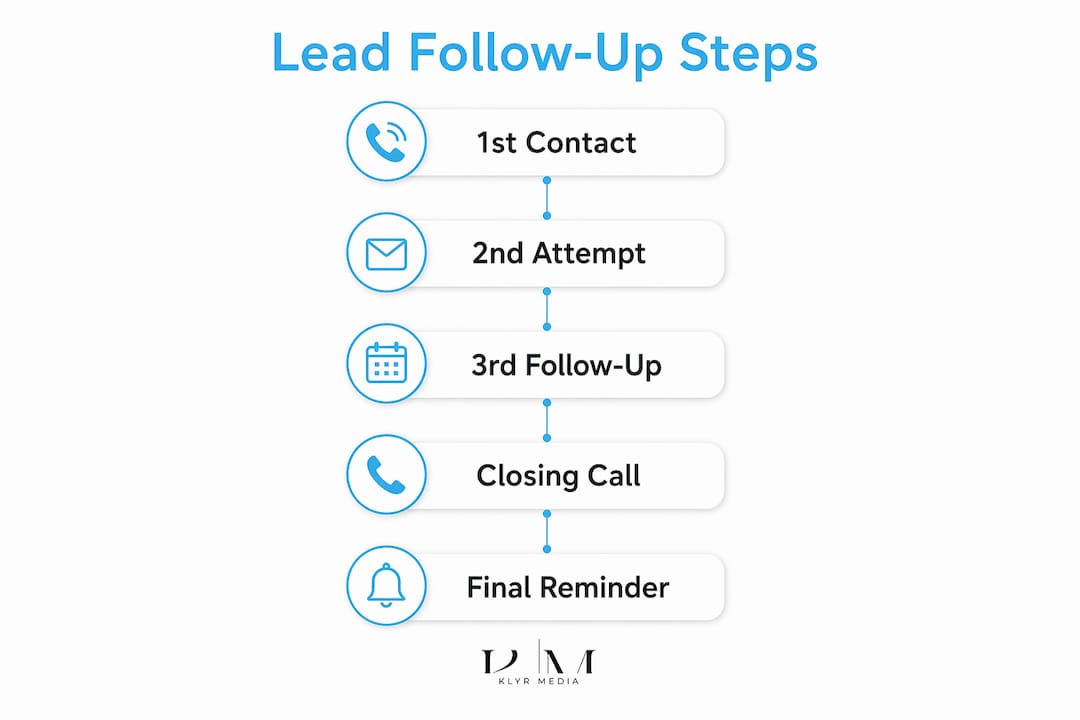
Run a multi-touch follow-up sequence. Do not call once and give up. A proven escalation model starts with two phone attempts, then moves to secure SMS, then email, all within the first 24 hours. Escalation ladders with SLA enforcement prevent leads from sitting idle during staffing gaps.
-
Automate after-hours handling. Use a HIPAA-compliant chatbot or secure voicemail-to-CRM integration so leads captured at 9 PM are queued for first-call-back at 8 AM. No lead should wait 16 hours with zero acknowledgment.
| Follow-up stage | Channel | Timing |
|---|---|---|
| First attempt | Phone call | Within 15 minutes |
| Second attempt | Phone call | Within 1 hour |
| Third attempt | Secure SMS | Within 4 hours |
| Fourth attempt | Within 24 hours | |
| Escalation | Supervisor review | After 24 hours, no response |
Pro Tip: Stage-specific automations tied to patient journey milestones reduce manual errors and free your intake staff to focus on conversations, not data entry. A pipeline with 8 or more defined stages consistently outperforms generic three-stage models.
The automated lead response question is not whether to automate. It is how fast you can get the automation live.
What are best practices for HIPAA compliance in lead generation?
Compliance is not just a legal checkbox. It is a trust signal. Patients who feel their data is handled carelessly do not come back, and they tell others. Here is what non-negotiable compliance looks like in a clinic marketing funnel.
- Sign BAAs with every vendor. Your CRM, email platform, SMS tool, scheduling software, and analytics provider all need signed Business Associate Agreements before they touch any lead data that could be linked to a patient.
- Encrypt data in transit and at rest. TLS encryption for data in motion and AES-256 for stored data are the current standards. If a vendor cannot confirm both, find a different vendor.
- Implement role-based access controls. Your front desk coordinator does not need access to the same lead data as your marketing manager. Limit access by role and log every interaction with an audit trail.
- Separate marketing data from PHI. HIPAA marketing rules require patient authorization for most marketing communications involving PHI. Keep your marketing CRM and your EHR in separate systems with no automatic data sync.
- Manage opt-ins explicitly. Every patient communication channel needs a clear opt-in and a clear opt-out path. Document consent with timestamps.
- Never use plain SMS or Gmail for PHI. Standard consumer tools are not HIPAA-compliant for patient outreach, regardless of whether a breach occurs. Use platforms built specifically for healthcare communication.
“The biggest compliance mistake clinics make is not a dramatic breach. It is the slow accumulation of small shortcuts: a staff member texting a patient from a personal phone, a lead form that feeds directly into a shared Gmail inbox, a CRM that was never covered by a BAA. Each one is a liability waiting to surface.” — Klyrmedia
Integrating your CRM with your EHR and practice management system (PMS) through a secure API prevents data silos without creating a compliance boundary violation. Patient engagement compliance is a discipline, not a one-time setup task.
How to measure and optimize your clinic’s patient acquisition process
You cannot fix what you do not measure. Most clinics track clicks and calls. The ones that grow track the full journey from first touch to scheduled appointment to completed visit to patient lifetime value.
Metrics that actually matter
Build a unified dashboard that connects your marketing data to your scheduling system and revenue data. The metrics worth tracking are: lead source (which channel generated the contact), conversion to scheduled appointment, appointment completion rate, and patient lifetime value by service line. Raw lead volume is a vanity metric. Conversion rate is the number that tells you whether your workflow is working.
Segmenting by service line and geography
A single clinic-wide conversion rate hides the real story. A primary care service line converting at 40% and a specialty service converting at 12% need completely different interventions. Segment your campaign data by service line and by geography so you can see exactly where the patient acquisition process is breaking down.
Training your front desk as a conversion team
The biggest failure in healthcare lead generation is generating clicks without an operational conversion layer. Speed and persistence in outreach are the core factors driving ROI, and both depend on your front desk staff executing the workflow correctly. Train them on the SLA, the escalation ladder, and the script for each service line. Review call recordings monthly.
Pro Tip: Run a quarterly audit of your underperforming lead sources. If a channel consistently produces leads that never convert to appointments, cut the budget before the next quarter starts. Reallocate to the channels where your cost per booked appointment is lowest.
| Metric | What it tells you |
|---|---|
| Lead source conversion rate | Which channels produce bookable patients, not just clicks |
| Time to first contact | Whether your SLA is being honored in practice |
| Appointment completion rate | Whether scheduled patients actually show up |
| Patient lifetime value by service | Which service lines are worth scaling |
Key takeaways
A clinic lead generation workflow succeeds only when HIPAA-compliant infrastructure, automated multi-touch follow-up, and performance tracking by service line operate together as a single system.
| Point | Details |
|---|---|
| Infrastructure before automation | Set up a healthcare CRM, BAAs, and consent management before launching any campaign. |
| 15-minute response SLA | Contacting leads within 15 minutes is the standard that separates high-converting clinics from the rest. |
| Escalation ladders prevent lost leads | Phone, SMS, and email sequences within 24 hours keep every lead in play, including after-hours inquiries. |
| Separate marketing data from PHI | Never sync your marketing CRM directly to your EHR. Maintain a strict compliance boundary between the two systems. |
| Measure conversion, not just volume | Track lead source to booked appointment to patient LTV. Raw lead counts tell you nothing useful. |
What I have learned building these workflows for healthcare practices
Here is the honest truth about clinic lead generation workflows: most clinics are not failing because of bad marketing. They are failing because the operational layer between “lead arrives” and “patient books” is broken or nonexistent.
The clinics I have seen grow consistently share one trait. They treat speed to contact as a clinical-grade SLA, not a suggestion. When a lead sits for two hours, it is not just a missed booking. It is a patient who went somewhere else, possibly to a lower-quality provider. That is a real outcome with real consequences.
The second pattern I keep seeing is the mixing of marketing and clinical data. It starts innocently. Someone exports a list from the EHR to send a promotional email. No BAA, no audit trail, no patient authorization. That is not just a compliance risk. It erodes the internal discipline that keeps the whole system trustworthy.
My honest recommendation: measure patient quality over raw lead volume. A clinic that books 20 high-value patients per month from a tight, well-targeted workflow outperforms one chasing 200 unqualified leads every time. Build the workflow right, train the team on the SLA, and then scale what works. The technology is not the hard part. The discipline is.
— Opinly
How Klyrmedia helps clinics build workflows that actually work
If you are reading this and thinking “we need to fix this,” you are not alone. Most independent clinics are running on disconnected tools, inconsistent follow-up, and marketing that does not connect to operations.
Klyrmedia builds HIPAA-compliant websites and marketing systems specifically for medical clinics and healthcare practices across the United States. That means secure lead capture, automated follow-up sequences, healthcare SEO that attracts high-intent patients, and dashboards that connect your marketing spend to actual appointment volume. No generic templates. No shortcuts on compliance. If you want a clinic marketing funnel that runs the way it should, Klyrmedia is built for exactly that.
FAQ
What is a lead generation workflow for clinics?
A lead generation workflow for clinics is a structured, HIPAA-compliant process that captures patient inquiries from multiple channels, routes them to intake staff, and follows up automatically until the patient books an appointment.
How fast should a clinic respond to a new lead?
The standard for healthcare lead workflows is a 15-minute first response. Delays beyond that window significantly reduce the likelihood of converting the lead to a booked appointment.
What tools do clinics need for HIPAA-compliant lead generation?
Clinics need a healthcare-specific CRM like Salesforce Health Cloud or HubSpot Healthcare, a BAA-covered communication platform for SMS and email, and a consent management system that separates marketing opt-ins from clinical consent.
Can clinics use regular SMS or Gmail for patient outreach?
No. Standard consumer tools are not HIPAA-compliant for patient outreach. Clinics must use platforms that provide encryption, audit logging, and a signed Business Associate Agreement.
What metrics should clinics track in their lead generation workflow?
Track lead source, conversion rate to scheduled appointment, appointment completion rate, and patient lifetime value by service line. These four metrics give a complete picture of where the workflow is performing and where it is losing patients.

