

Healthcare Call Tracking: What Clinics Need to Know

Healthcare call tracking is defined as the process of monitoring, recording, and analyzing inbound patient phone calls to link them directly to marketing campaigns and internal workflows. The industry term for this practice is call attribution, and it sits at the center of any serious patient acquisition strategy. If your clinic runs Google Ads, local SEO, or direct mail and you cannot tell which channel drove a specific call, you are spending blind. Approximately 80% of new patient leads originate from inbound phone calls. That single fact makes call tracking one of the highest-leverage tools available to healthcare administrators today.
What is healthcare call tracking and how does it work?
Healthcare call tracking assigns unique phone numbers to each marketing channel or campaign. When a patient dials one of those numbers, the system captures the call source, caller ID, location, call duration, and whether the call resulted in an appointment. That data feeds into a central dashboard where administrators can see exactly which campaigns are generating real patient conversations, not just website clicks.
There are two core number allocation methods: static and dynamic. Static tracking assigns one fixed number to a specific channel, such as a billboard or print ad. Dynamic number insertion, or DNI, swaps the phone number displayed on your website in real time based on how a visitor arrived, whether through a paid ad, organic search, or a referral link. DNI gives you granular, visitor-level data that static numbers simply cannot provide.
Call tracking systems capture caller phone number, location, marketing source, call duration, and repeat caller recognition through AI to improve routing and analysis. That last point matters more than most administrators realize. When a returning patient calls, AI-assisted routing can prioritize or flag that call differently than a first-time inquiry, reducing friction and improving the patient experience.

Integration with Electronic Health Records and practice management systems creates a connected patient journey view. A call that books an appointment can be matched to the patient record, closing the loop between your marketing spend and actual clinical outcomes.
Pro Tip: Set up a dedicated tracking number for every active marketing channel, including your Google Business Profile. Most clinics overlook that one, and it is often the highest-volume source.
Healthcare call tracking benefits for marketing and patient acquisition
Call tracking moves healthcare marketing from anecdotal guesswork to concrete ROI measurement by linking campaigns directly to appointment bookings. You stop optimizing for clicks and start optimizing for patients who actually show up.
The marketing benefits stack up quickly:
- Source attribution: Know whether a new patient found you through a Google Ad, a Facebook post, or your local SEO listing. Without this, budget decisions are guesses.
- Campaign ROI: Compare cost per call across channels. A campaign generating 50 calls at $10 each beats one generating 200 clicks at $5 each if those clicks never convert.
- Caller behavior analysis: Call recordings and transcriptions reveal what patients ask most, which objections come up, and what information they need before booking.
- Missed call recovery: The system flags unanswered calls so your team can follow up before that patient calls a competitor clinic down the street.
- Appointment conversion tracking: Tie specific calls to confirmed bookings to measure which campaigns fill your schedule, not just your call log.
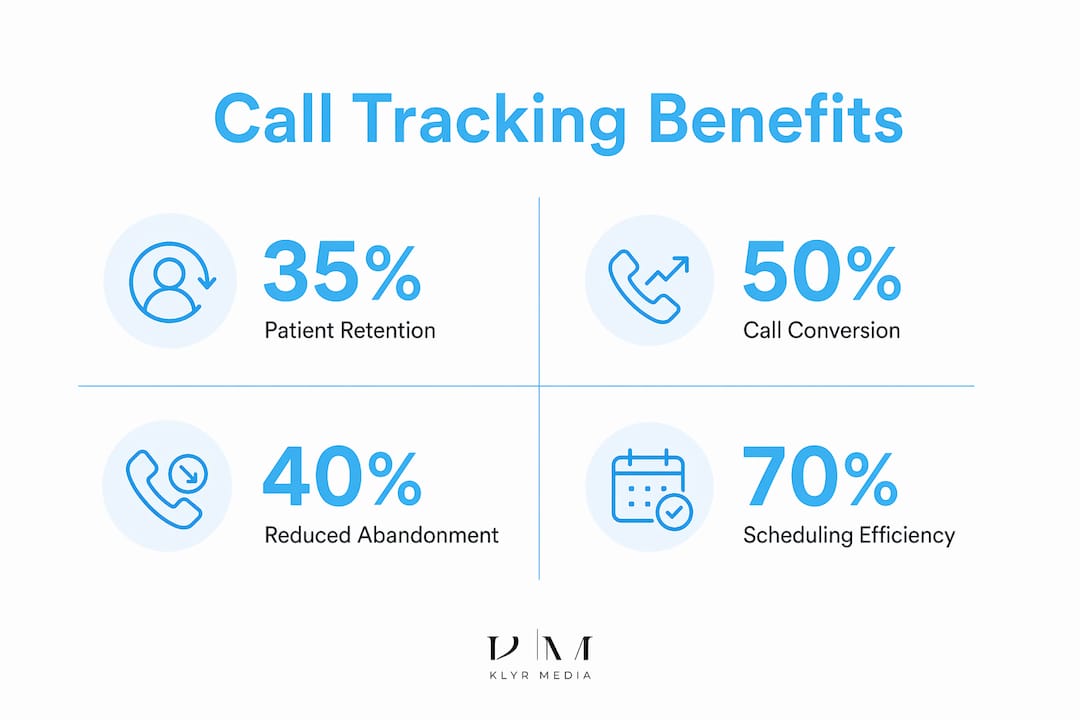
Call analytics reduce patient churn and improve service delivery by surfacing patterns in caller needs and scheduling friction. A clinic that sees 30% of Monday morning calls going unanswered has a staffing problem it did not know about until the data showed it.
The healthcare marketing call tracking picture in 2026 is increasingly tied to AI-driven attribution. Practices that connect call data to their PPC campaigns see faster budget reallocation toward channels that actually produce appointments.
Operational advantages: what call tracking does inside your practice
The internal benefits of call tracking are just as significant as the marketing gains. Most administrators focus on the marketing ROI story and miss the operational half entirely.
Manual or AI-driven quality assurance of recorded calls integrated with EHR or CRM systems allows immediate review of missed opportunities and targeted staff training. A front-desk manager can pull up every call that did not result in a booking and listen for patterns: rushed greetings, failure to offer same-day appointments, or confusion about insurance questions.
Here is how to build a functional operational review process:
- Flag unconverted calls automatically. Configure your call tracking platform to tag any call over 90 seconds that did not result in a scheduled appointment. These are your highest-value coaching opportunities.
- Review flagged calls weekly. Assign a manager to listen to a sample of flagged calls each week. Look for recurring objections or process failures, not individual blame.
- Use AI transcription for scale. AI transcriptions convert calls into searchable text, so you can search for keywords like “insurance” or “wait time” across hundreds of calls without listening to each one.
- Coach in real time. Share specific call clips with front-desk staff during team meetings. Concrete examples land harder than general feedback.
- Track improvement over time. Set a baseline conversion rate for inbound calls and measure it monthly. A 5% improvement in call-to-appointment conversion can meaningfully change your monthly patient volume.
Call tracking improves scheduling efficiency and reduces abandonment rates by surfacing exactly where patients drop off in the phone experience. That is revenue that never walked in, and now you can see it.
Pro Tip: Pair call recordings with your scheduling software data. If a call lasted four minutes but no appointment was booked, that is a conversion failure worth investigating, not just a long call.
Implementing healthcare call tracking: compliance and practical setup
Choosing a call tracking solution for a healthcare practice is not the same as choosing one for a retail business. HIPAA compliance is non-negotiable. Any platform you use must sign a Business Associate Agreement, or BAA, with your practice before you share any patient data.
HIPAA-compliant call tracking requires encryption, secure storage, strict access controls, and audit trails to protect patient data. Platforms that do not offer these features expose your practice to significant legal and financial risk.
Key features to evaluate when selecting a call tracking solution:
- Source attribution and DNI: The platform must support dynamic number insertion for accurate web visitor tracking.
- Call recording with consent management: The system should handle state-specific recording consent disclosures automatically.
- HIPAA-compliant data storage: Confirm that call recordings and transcripts are stored with encryption and role-based access.
- EHR and CRM integration: Look for native connectors to your existing practice management software.
- Real-time dashboards: You need live visibility into call volume, missed calls, and source performance, not weekly exports.
“The biggest compliance mistake clinics make is using a generic call tracking tool without a BAA. The tool may work perfectly, but the data handling violates HIPAA the moment a patient’s name or health information appears in a call record.”
Staff training is the step most practices skip. The technology only works if your front-desk team understands why calls are being recorded, how to handle patient questions about recording, and how their performance connects to the data. A brief onboarding session and a written policy go a long way toward adoption.
For practices building out their patient experience online, call tracking integrates naturally with appointment request forms and live chat to create a complete picture of how patients contact your practice.
Measuring success: key call tracking metrics that matter
Call tracking data is only useful if you know which numbers to watch. The metrics that drive decisions fall into a short, clear list.
| Metric | What it tells you |
|---|---|
| Call volume by source | Which marketing channels drive the most patient calls |
| Call-to-appointment rate | How effectively your team converts calls into bookings |
| Missed call rate | The percentage of inbound calls that go unanswered |
| Average call duration | Longer calls often signal confusion or friction in the booking process |
| Repeat caller rate | Patients calling back may indicate unresolved issues or poor first-call resolution |
| Cost per call by campaign | The true acquisition cost of each patient inquiry from paid channels |
Call metrics like call volume, conversion rates, and caller geography support strategic decisions about marketing budget and staffing levels. A spike in calls from a specific zip code, for example, might justify a targeted local SEO push in that area.
Set benchmarks in your first 30 days. Without a baseline, you cannot measure improvement. Most practices find their missed call rate is higher than expected once they start tracking it. That is not a failure. It is the data doing its job.
Tracking marketing efforts to actual appointment bookings rather than clicks or call volume alone gives you the clearest picture of what your marketing budget is actually producing. Pair that with healthcare PPC campaigns and you can reallocate budget toward the channels filling your schedule fastest.
Pro Tip: Review your call-to-appointment rate by day of week and time of day. Many clinics discover that Friday afternoon calls convert at half the rate of Tuesday morning calls, simply because staffing is lighter. That is a scheduling fix, not a marketing fix.
Key Takeaways
Healthcare call tracking delivers measurable patient acquisition and operational improvements only when practices actively use the data, not just collect it.
| Point | Details |
|---|---|
| Call tracking is attribution technology | It links every inbound patient call to a specific marketing source for real ROI measurement. |
| 80% of new patient leads come from calls | Phone calls are the dominant patient acquisition channel, making tracking non-negotiable. |
| HIPAA compliance requires a BAA | Any call tracking platform handling patient data must sign a Business Associate Agreement with your practice. |
| Operational gains match marketing gains | Call recordings reveal front-desk training gaps and scheduling inefficiencies that cost practices real revenue. |
| Key metrics drive decisions | Track call-to-appointment rate, missed call rate, and cost per call to allocate budget and staff effectively. |
The part most clinics get wrong about call tracking
Call tracking is not a set-it-and-forget-it tool. That is the honest truth most vendors will not tell you upfront. Practices install a platform, watch the dashboard for a week, and then let the data pile up without acting on it. The calls keep coming. The missed opportunities keep stacking. Nothing changes.
The clinics that actually benefit from call tracking treat it like a quality assurance program, not a reporting feature. They assign someone to review flagged calls every week. They share recordings in staff meetings. They adjust their Google Ads budget based on which campaigns are generating actual appointments, not just impressions. That active loop is what separates a practice growing its patient base from one that is just collecting data.
There is also a compliance angle that deserves more attention than it gets. HIPAA does not just apply to your EHR. The moment a patient mentions a health condition on a recorded call, that recording is protected health information. Practices that use non-compliant platforms are carrying a liability they may not even know about. Get the BAA signed before you record a single call.
The deeper value of call tracking shows up over time. After six months of consistent data, you can see which campaigns attract patients who actually keep their appointments versus those who book and cancel. That kind of insight changes how you spend your marketing budget at a fundamental level. Most practices never get there because they stop paying attention after the first month.
If you are serious about medical marketing as a growth driver, call tracking is the measurement layer that makes everything else accountable.
— Opinly
How Klyrmedia helps healthcare practices get more from every call
Klyrmedia builds marketing systems specifically for independent clinics, pharmacies, and healthcare practices across the United States. Every campaign we run is designed to be measurable, from the first patient search to the confirmed appointment.
Our healthcare SEO services are built to drive inbound calls from patients actively searching for care in your area. We pair that with HIPAA-compliant web design and marketing automation that follows up on missed calls and unconverted inquiries automatically. If you want to know exactly which part of your marketing is filling your schedule, and which part is burning budget, Klyrmedia gives you that clarity.
FAQ
What is healthcare call tracking?
Healthcare call tracking is a system that assigns unique phone numbers to marketing channels and records inbound patient calls to link them to specific campaigns. It gives practices measurable data on which marketing efforts drive real appointments.
How does call tracking work in healthcare?
Call tracking uses static or dynamic phone numbers to capture call source, duration, and caller data. That information integrates with practice management and CRM systems to show the full patient acquisition path.
What call tracking metrics should clinics monitor?
The most important metrics are call-to-appointment rate, missed call rate, call volume by source, and cost per call by campaign. These four numbers tell you where your marketing is working and where your front desk is losing patients.
Is call tracking HIPAA compliant?
Call tracking can be HIPAA compliant when the platform uses encryption, secure storage, access controls, and audit trails. The platform must also sign a Business Associate Agreement with your practice before handling any patient call data.
Why is call tracking important for clinics?
80% of new patient leads come from inbound phone calls, making the phone the single most important patient acquisition channel. Without call tracking, clinics cannot measure which marketing investments are actually generating patients.

